剧情简介
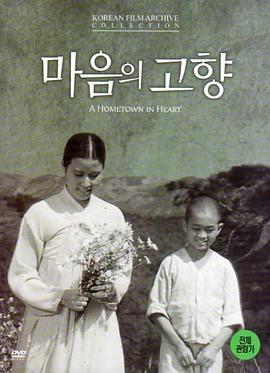
【心中的故乡】Synopsis Do-seong (Yoo Min) is a child monk who lives at a small mountain temple with the head monk (Byeon Ki-jong), learning the teachings of Buddha. He becomes attached to a young widow (Choi Eun-hee) who comes to pray at the temple, and the childless widow entreats the head monk to let her raise Do-seong as her own son. Conflict ensues when Do-seong's real mother (Kim Seon-young) appears, but she leaves the temple for the sake of her son's future. On the day the widow is to take the child down from the mountain, the head monk discovers that Do-seong has killed a bird by ensnaringit in a trap and decides not to let the boy go into the secular world. When Do-seong finds out that his real mother has been to the temple, he sets out to find her. Notes A film that has garnered recognition for its cinematography and direction by eliminating sentimentality and unaffectedly capturing the quiet life of a mountain temple. A Hometown in Heart demonstrates the camera technique and directorial skill of movies that appeared after the liberation of Korea. A Hometown in Heart, adapted from playwright Ham Se-deok's A Little Monk (Dong-seung), was hailed upon its release as a masterpiece that marked a new pinnacle in Korean moviemaking after the liberation. Eschewing new-school sentimentality to quietly express a boy's longing for maternal love, the film unfolds the everyday lives of three generationsthe head monk, a young monk, and a little child monkagainst the backdrop of a quiet temple in the mountains. The long shots utilized by director of cinematography Han Hyung-mo to capture the beautiful scenery of the mountain temple from a distance received great critical acclaim at the time. Also, each of the film's characters is convincingly portrayed through the skillful direction of Yoon Yong-kyu. In particular, the scene which expresses Do-seong's desperate yearning for a mother's love and his birth mother's past visit to the temple by combining them into a dream sequence reveals deep consideration for articulating story and emotion via a compressed visual grammar without tending toward sentimentalism. The movie's final scene, in which Do-seong awakens from his dream and sets off down the path in search of his mother, is both touching and beautiful. The film also features Choi Eun-hee, in the part of the young widow who warmly embraces Do-seong with her love, in one of her first roles. Afterword - Lee Kang-su, writing under the pseudonym of Kwak Il-byeong, first adapted playwright Ham Se-deok's A Little Monk (Dong-seung) into a screenplay, which was then shot for the silver screen with additional embellishments by the director.
《心中的故乡》是尹龙奎于1949年创作的一部经典剧情片作品, 由Choi,Eun-Hee,,Byeon,Ki-Jong,,Yoo,Min,,Kim,Seon-Young,,Seok,Keum-Seong,,Nam,Seung-Min等主演,在韩国播出后引发了不少观众的讨论和好评。 影片通过Synopsis Do-seong (Yoo Min) is a child monk who lives at a small mountain temple with the head monk (Byeon Ki-jong), learning the teachings of Buddha. He becomes attached to a young widow (Choi Eun-hee) who comes to pray at the temple, and the childless …, 展现了创作者对于现实生活与情感世界的观察,因此常被不少观众称为“值得二刷、三刷”的剧情片。
很多影迷之所以推荐《心中的故乡》, 是因为片中无论是故事线的推进,还是演员之间的对手戏,都有着比较强的张力和代入感。 当你跟随剧情慢慢深入时,会发现每个角色的选择背后都有其不得不如此的原因, 这也让整部作品在娱乐性之外,多了一层对现实与人性的思考空间。
从类型角度来看,《心中的故乡》既保留了剧情片应有的节奏和看点, 又在细节上做了不少打磨:节奏方面尽量避免无意义的拖沓桥段,人物塑造上也不简单脸谱化, 而是通过多场戏份逐步丰富角色背景,让观众在追看的过程中逐渐理解他们的选择与矛盾, 从而对这部作品产生更深层次的情感共鸣。
如果你正在寻找一部既有故事性,又具备一定思考深度的剧情片, 那么《心中的故乡》会是一个不错的选择。 无论是想在闲暇时间放松心情,还是希望通过剧情获得一些情绪上的共鸣与释放, 这部作品都能够在不同程度上满足你的观看需求。